One board from backlog to release
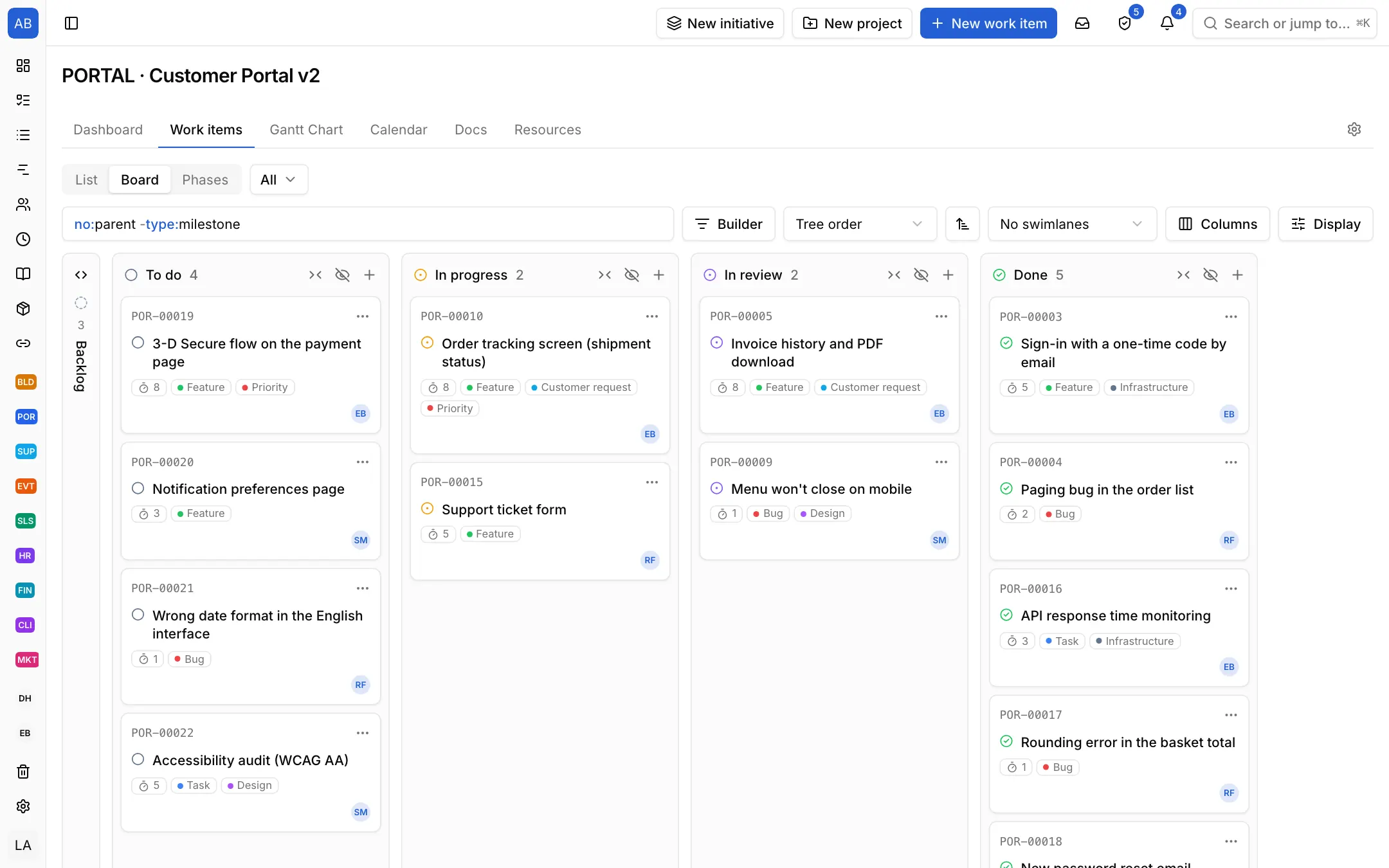
Backlog, To do, In progress, In review and Done come set up. Cards show the estimate, priority and labels; drag a card to change its state, or split the board into swimlanes by owner or label.

Industries / Software
Features, bugs and releases move from the backlog through review to release on one board. Cycles open on their own and points add up, so you see what will make it and what will not before the cycle ends.
The problem
Customer requests, bugs and planned work get mixed up in one list. How much work went into the cycle, how much is done and what is waiting in review only becomes clear on the last day.
Backlog, To do, In progress, In review and Done come set up. Cards show the estimate, priority and labels; drag a card to change its state, or split the board into swimlanes by owner or label.
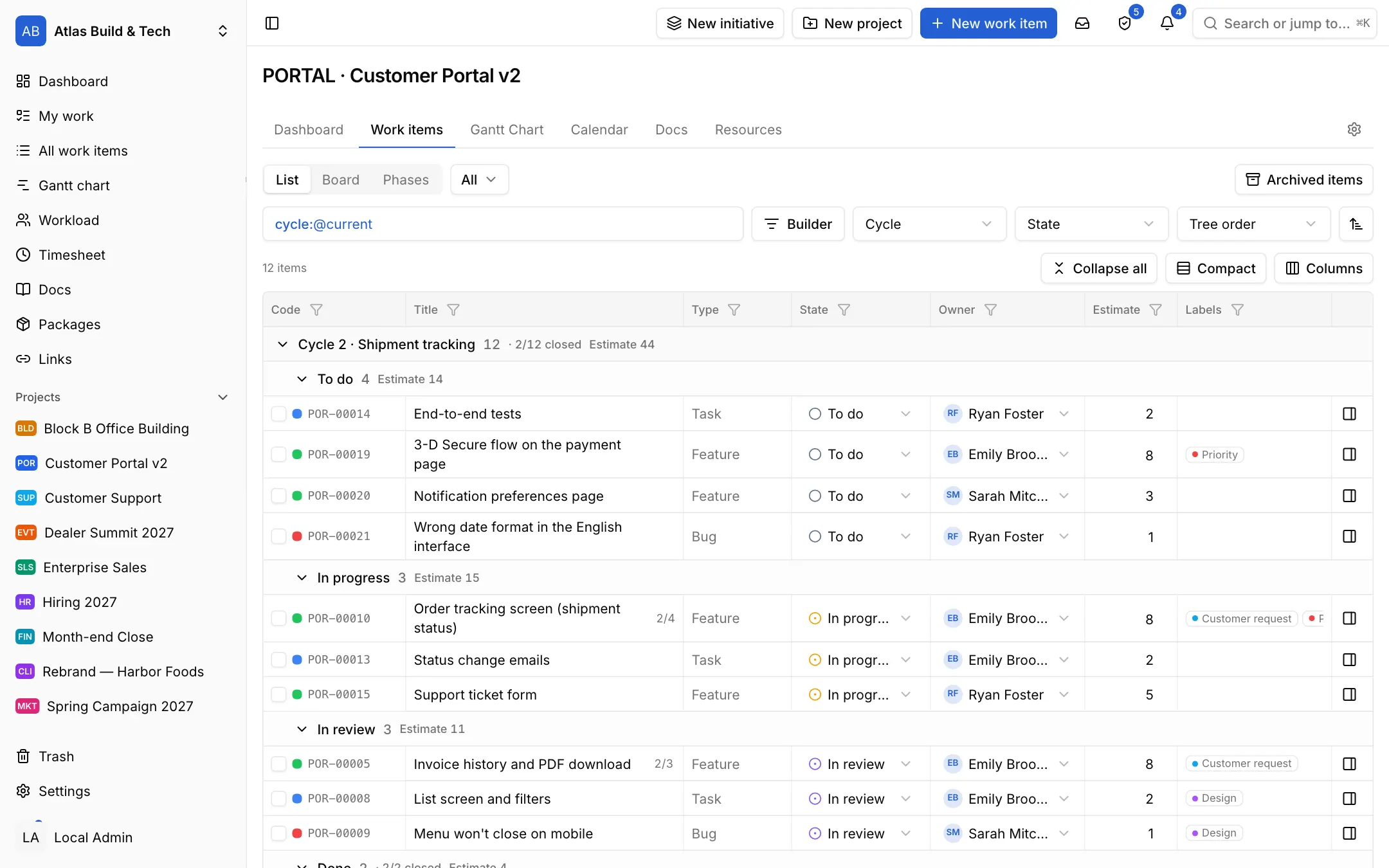
Two-week cycles open on their own. Group this cycle's work by state: each group shows its points and how many items are closed, so work waiting for review is not taken for done. Unfinished work moves to the next cycle.
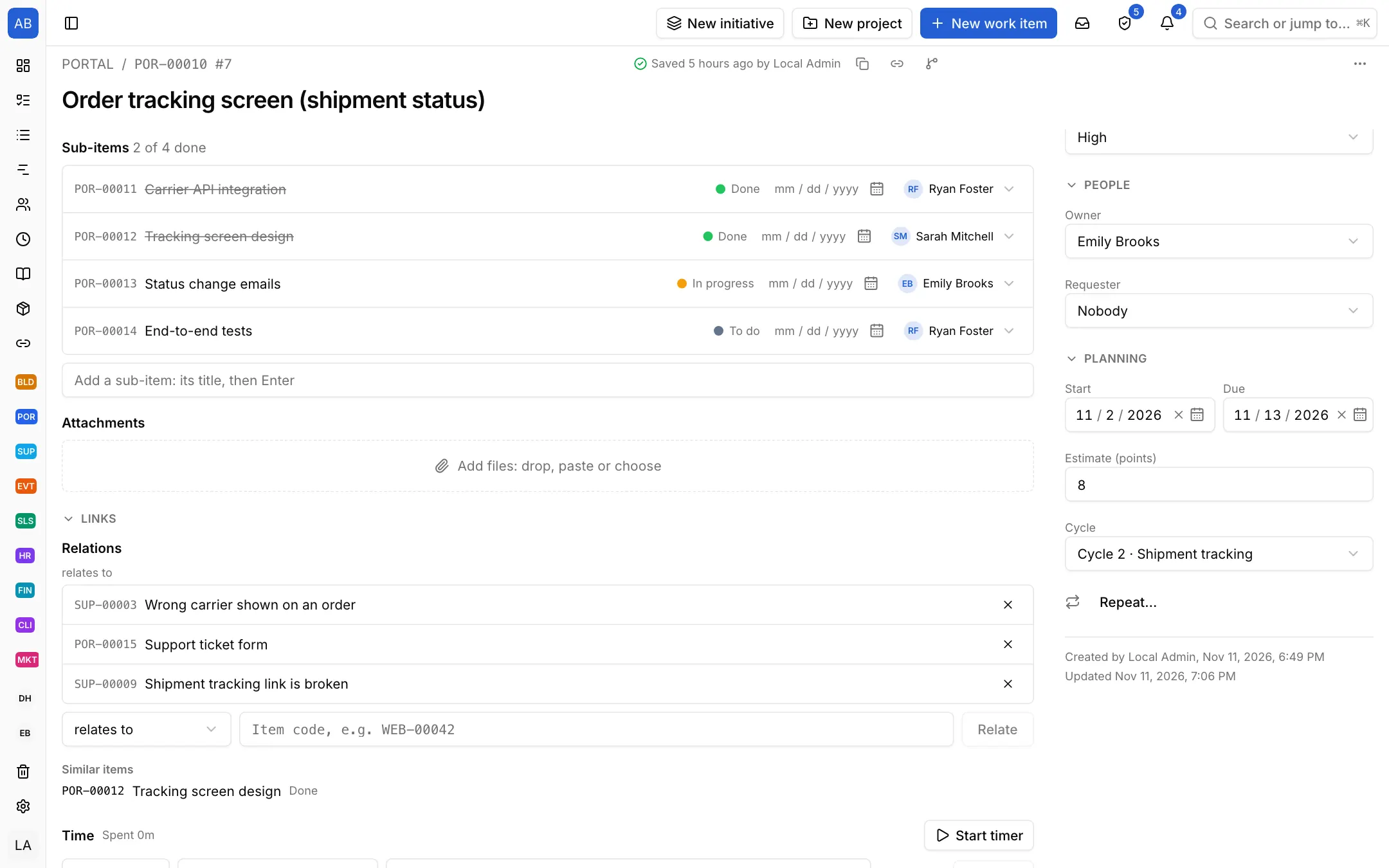
A feature's sub-items, point estimate, cycle and linked support tickets on one screen. With GitHub or Gitea connected, branches, commits and pull requests that mention its code are linked too, and a merge moves the item forward.
Each setup is a starting point drawn from how that kind of work commonly runs: the state names, item types and steps come from the words those teams use. It does not know your process, so everything in it is yours to change. Tell us what is missing at destek@neoli.app and we improve the setups.
You set up the connection in the workspace settings; branches, commits and pull requests that mention an item's code are linked to it, and the rules you choose move the item forward on merge.
In the software setup two-week cycles open on their own. You take items into a cycle; unfinished ones move to the next when it closes, and the cycle report shows what was taken and what was done.
The incident template opens impact assessment, workaround, root cause, permanent fix and post-incident review as steps; you write the timeline in the description and link the related bugs and tickets.
Start with the General setup: it comes with phases, tasks and milestones; you add your own states, item types and fields. When it fits, keep the project as a template.
Start with the General setupOpen your workspace in a minute and invite your team.
Start free